
The Lagos State government has announced a 20 per cent discount on selected essential food commodities in 66 designated markets across the state.
The discount, the government said, is part of efforts to ease the rising cost of living and reduce the financial burden on households during this year’s festive season.
The intervention, under the Ounje Eko Food Discount Market Programme, will cover all 57 local government areas and Local Council Development Areas (LCDAs) with the first market scheduled to open on Sunday, November 29.
The Commissioner for Agriculture and Food Systems, Ms. Abisola Olusanya, who announced the programme at a media briefing in Ikeja, said Governor Babajide Sanwo-Olu approved the initiative to provide immediate relief to residents amid mounting household expenditure.
The commissioner said the programme would operate across the five IBILE divisions of the state: Ikeja, Badagry, Ikorodu, Lagos Island, and Epe, with community markets opening on November 29, December 6, and December 20, between 9 a.m. and 4 p.m.
Ms. Olusanya said: “As we approach the end of the year, with the additional financial commitments that typically accompany the festive season, Mr. Governor considers it important that we provide some measure of relief to Lagosians, particularly in respect of their expenditure on food.
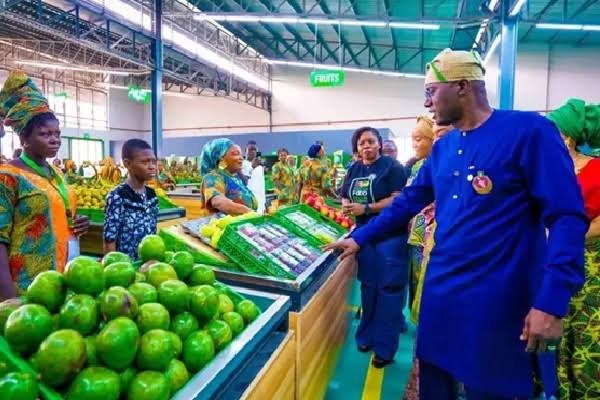
“For this particular edition, our focus is on the consumer and how we can help households to stretch their food budgets a little further during the festive season.”
Under the arrangement, households will enjoy a 20 per cent reduction on approved prevailing market prices of selected food items, including rice, beans, garri, bread, eggs, tomatoes, pepper, and onions.
The purchase limits have been designed to ensure wider access to the intervention, with each household entitled to one five-kilogramme pack each of rice, beans, and garri, two loaves of bread, one crate of eggs, two kilogrammes of tomatoes, one kilogramme of pepper, one kilogramme of tatashe or shombo, and one kilogramme of onions.
Ms. Olusanya explained that although commodity prices could vary slightly across locations because of differences in prevailing market prices, the 20 per cent discount would apply uniformly.
The commissioner said both the approved market prices and discounted prices would be displayed at participating markets to promote transparency and help consumers make informed purchasing decisions.
Beyond community markets, the programme is expected to extend to institutional markets at the University of Lagos (UNILAG), Yaba College of Technology, Lagos State University of Science and Technology (YabaTech), Lagos State University (LASU), Lagos State University of Education (LASUED), Lagos State University Teaching Hospital (LUTH), and the state secretariat at Alausa, Ikeja.
The commissioner said the Lagos Fresh Food Hubs in Mushin and Agege will also participate, with operations scheduled for Wednesdays and Saturdays.
Ms. Olusanya said the government had drawn on lessons from previous editions to strengthen payment verification, commodity distribution, customer experience and financial accountability.
According to her, each market will have a market leader and deputy, supported by ministry officials, accountants, auditors, representatives of local governments and LCDAs, as well as young people drawn from the National Youth Council.
The purchasing process will involve payment through designated Point-of-Sale (POS) terminals, after which customers will receive transaction receipts for verification and the issuance of commodity vouchers. The vouchers will be presented to participating vendors in exchange for food items.
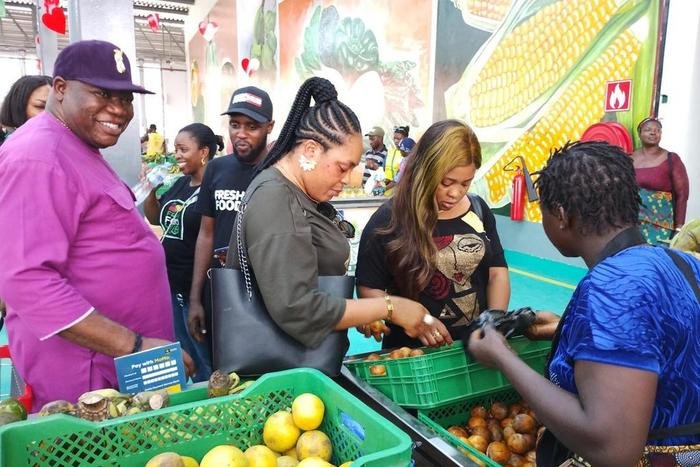
“No commodity will be released without a valid voucher,” she said, adding that market managers, vendors and payment service providers would reconcile payments, redeemed vouchers and quantities sold at the close of each market day.
The government has enlisted Providus Bank, MoMo Payment Service Bank, SmartCash Payment Service Bank, MoneyMaster Payment Service Bank, PalmPay, and Interswitch as financial and payment solution partners.
The commissioner said the government would also engage food vendors operating within host communities to reduce logistics costs and ensure that small businesses benefit economically from the intervention.
She, however, warned against bulk purchases beyond the approved limits, particularly by individuals seeking to buy discounted commodities for commercial resale.
“The purchase limits we have established are intended to ensure that as many households as possible can benefit from the intervention. Repeated purchases beyond the approved limits, particularly for commercial resale, would undermine the very purpose for which Mr Governor has approved this intervention,” she said.
Ms. Olusanya urged the residents to respect the limits, noting that market officials would enforce the restrictions to prevent a few buyers from monopolising the subsidised commodities.
The commissioner stressed that the government regarded the discount market as part of a broader strategy to address food affordability while pursuing structural reforms in production, storage, processing, logistics and distribution.
“Interventions such as Ounje Eko complement that work by providing more immediate support to households while we continue to address those longer-term challenges.
“The detailed calendar of participating markets, including their addresses and operating dates, will be published on the Ministry of Agriculture and Food Systems’ website and social media platforms,” she added.