The Federal Government has expressed support for private sector investment in advanced medical technologies such as robotic surgery, saying the development would help improve healthcare outcomes and reduce Nigerians’ dependence on overseas treatment.
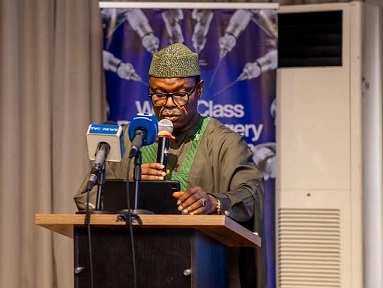
The Minister of State for Health and Social Welfare, Dr Iziaq Adekunle Salako, stated this at the dinner luncheon marking the launch of Redeemer’s Health Village (RHV) Robotic Surgery Programme in Lagos.
Salako said the robotic surgery initiative, which offers greater surgical precision, faster recovery, earlier discharge and improved patient outcomes, aligned with the Federal Government’s health transformation agenda and its efforts to reverse the trend of medical tourism.
He commended the leadership of the Redeemed Christian Church of God and the Chief Executive Officer of RHV, Dr Ademola Dada, for investing in infrastructure, human resources and advanced technology to position the facility as a world-class healthcare centre.
According to him, the initiative aligns with two key pillars of the government’s health transformation agenda: improving health outcomes and unlocking the healthcare value chain.
He added that the adoption of robotic surgery would contribute to the government’s vision of reversing the dominant direction of medical tourism from outbound to inbound, while conserving the country’s scarce foreign exchange.
The minister said the government recognised the critical role of the private sector in delivering high-end medical services, noting that the sector currently provides more than 50 per cent of healthcare services in Nigeria.
He cited the Presidential Initiative on Unlocking Healthcare Value Chain and the Presidential Executive Order for Pharmaceutical and Allied Sectors as measures being implemented to strengthen local capacity and attract greater private sector participation in healthcare delivery.
Salako explained that the Presidential Initiative on Unlocking Healthcare Value Chain was designed to accelerate health value-chain transformation through coordination and collaboration, while the executive order provides incentives for local manufacturing of medicines and other healthcare commodities, including syringes and rapid diagnostic test kits.
He said the initiatives were intended to build a resilient health system by leveraging funding mechanisms, pooled procurement, research and innovation, with the private sector serving as a major driver.
Salako also disclosed that the RHV robotic surgery programme includes a structured training programme for surgeons interested in robotic surgery, with certification to enable them to practise the technology safely and under controlled conditions.
He described the training component as a commendable opportunity to upgrade the clinical skills of Nigerian surgeons and encouraged medical professionals to take advantage of it.
The minister also commended RHV’s partnership with RoboMed Global Inc. of the United States, describing the Nigeria Diaspora-led enterprise’s decision to bring its expertise to the country as consistent with the Federal Government’s strategy of engaging Nigerian professionals in the diaspora.
He said the government viewed Nigerian professionals abroad as valuable resources who could contribute to national development through temporary or permanent engagements.
Salako said this was the principle behind the Diaspora Health Impact Initiative and the recently launched Diaspora Advance Health Programme Portal, which he said were designed to provide opportunities for Nigerian health professionals in the diaspora to contribute to the country’s health system.
According to him, the introduction of robotic surgery at RHV would enhance Nigeria’s capacity to provide advanced, precise and minimally invasive surgical care delivered by Nigerian professionals trained to global standards.
He said the development would help Nigerians access world-class surgical interventions without having to travel abroad.
“East or West, home is the best, and the best place to get the best care is wherever you call home and for us here, that is Nigeria,” Salako said.
The minister thanked the key actors behind the initiative, including Dada and Professor Ekwenna, for their efforts in bringing the programme to fruition.
He disclosed that about $4m had been invested in the initiative, describing the investment as a demonstration of confidence in the economic reforms being implemented by President Bola Ahmed Tinubu’s administration.
Salako urged more Nigerians in the diaspora to emulate the initiative by investing in Nigeria, saying such investments could generate employment and contribute to economic prosperity.
He assured private investors and healthcare institutions of the government’s commitment to creating an enabling environment for the expansion of high-end healthcare services across the country.
The minister called for collective efforts to build a health system anchored on equity and affordability and capable of meeting the healthcare needs of Nigerians.