The Federal Government has admitted an additional 150,000 trainees into its Technical and Vocational Education and Training programme after 87,701 beneficiaries completed training in the first cohort.
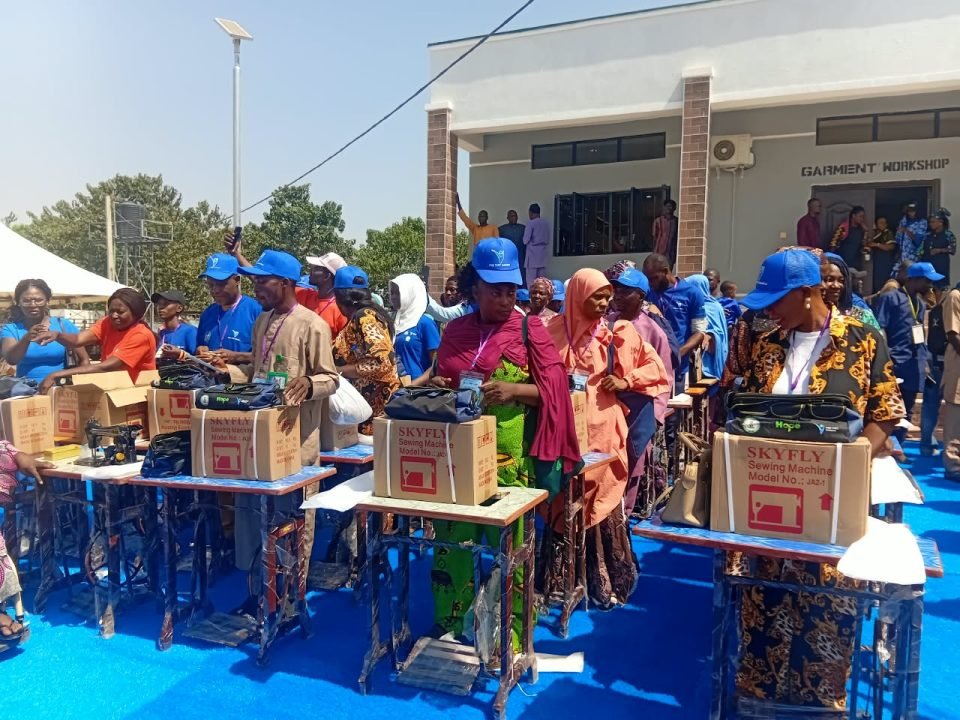
The Minister of Education, Dr Tunji Alausa, disclosed this on Wednesday at the first cohort’s graduation ceremony and the presentation of starter kits to beneficiaries at Federal Technical College, Orozo, Abuja.
Alausa said the new trainees were selected from nearly 1.5 million applications received for the second cohort and would undergo training at 82 accredited centres across the country.
He said the expansion reflected President Bola Tinubu’s commitment to equipping Nigerian youths with practical skills to improve their employability, promote entrepreneurship and achieve economic self-reliance.
According to him, the programme is designed to bridge the gap between skills acquisition and economic opportunities by providing relevant training and equipment to enable beneficiaries to establish businesses.
“Through the Renewed Hope Agenda, Mr President has placed aspirations of young Nigerians at the heart of our national developmental efforts.
“His support for this initiative is an investment in their capacity to earn a dignified living and help build a strong Nigerian economy,” he said.
The minister said Nigeria’s development depends on a skilled workforce capable of meeting the demands of industries and society, stressing the need for technicians, electricians, artisans, and entrepreneurs who can translate their skills into sustainable businesses.
Alausa said the first cohort completed training in various trades, including welding and fabrication, electrical installation, automobile mechanics, solar photovoltaic installation, and fashion design, among others.
According to him,competency-based assessments and certification were ongoing to ensure that the beneficiaries obtained nationally recognised skills qualifications.
He described the distribution of starter kits as a critical component of the programme, noting that access to relevant equipment would enable graduates to translate their acquired skills into productive economic activities.
He said beneficiaries trained in trades without designated starter kits, including livestock, agricultural technology and animal husbandry, would receive equivalent financial support.
“The lasting value of this initiative will be measured by what happens after training: graduates securing work, establishing businesses, improving their earnings and creating opportunities for others,” he said.
The minister urged the graduates to use their starter kits productively, maintain professional standards, follow safety regulations and uphold integrity in their businesses.
The Minister of State for Education, Prof. Suwaiba Ahmad, also described the graduation as a significant milestone in the Federal Government’s efforts to reposition technical and vocational education.
Ahmad said the programme had demonstrated the government’s capacity to provide practical training, stipends and starter kits to empower young Nigerians.
She recalled that the initiative initially faced doubts about the government’s ability to pay trainees’ stipends, remunerate service providers and provide starter kits, but said its implementation showed the objectives were achievable.
She added that the programme was designed to align vocational training with industry requirements through accredited centres and relevant curricula.
The minister urged graduates to deploy their skills responsibly, start businesses, explore employment opportunities, and share their knowledge by training others.
The Chairman of the House of Representatives Committee on Basic Education, Mark Useni, described technical and vocational education as fundamental to Nigeria’s technological advancement.
Useni commended the Ministry of Education for aligning its reforms with the Tinubu administration’s development agenda.
He urged the beneficiaries to maximise the opportunity to improve their livelihoods and contribute meaningfully to national development.
One of the beneficiaries, Rashidat Isah, thanked Tinubu for the initiative, saying the starter kits would improve her livelihood and those of other graduates