Swedish scientists have developed a new device that can detect tuberculosis (TB) DNA in exhaled air, offering a potential alternative when sputum samples are difficult to obtain.
Tuberculosis, an airborne disease, is usually diagnosed by testing sputum — mucus coughed up from the lungs. However, many patients are unable to produce sputum, which makes diagnosis challenging.
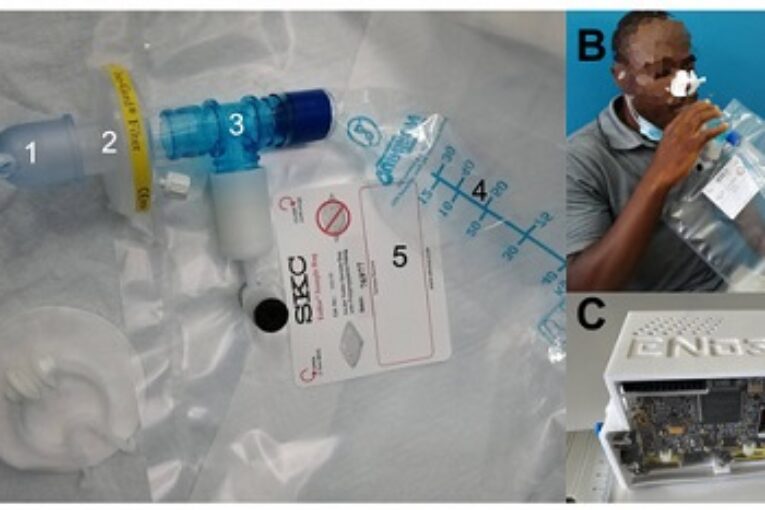
The new method, called TB Hotspot detectOR (THOR), captures aerosols from a person’s breath using electrostatic sampling. The collected samples are then analysed with the same molecular test used for sputum, Xpert MTB/RIF Ultra.
Researchers from the Karolinska Institutet investigated whether people with TB release genetic material from the bacterium directly into the air when they breathe.
Jay Achar of the institute’s Department of Global Public Health said the results are encouraging, particularly for settings where sputum collection is difficult.
The findings, published in Open Forum Infectious Diseases, are based on a study of 137 adults with TB at primary healthcare centres in South Africa.
The device detected TB DNA in exhaled air in 47 per cent of participants who also had positive sputum tests.
Among patients with high bacterial loads in sputum, sensitivity increased to 57 per cent.
The method showed a specificity of 77 per cent, meaning it correctly identified people without TB in most cases.
Researchers also detected TB DNA in 30 per cent of environmental air samples in clinic rooms, despite thorough cleaning. This suggests the method is highly sensitive and also highlights the potential risk of airborne transmission in healthcare settings.
The study marks an important step toward better understanding how TB spreads and improving early detection of infectious individuals — especially where sputum samples are hard to obtain.
Higher detection rates were linked to men with heavy bacterial loads in sputum, while patients with fever were slightly less likely to test positive in air samples.