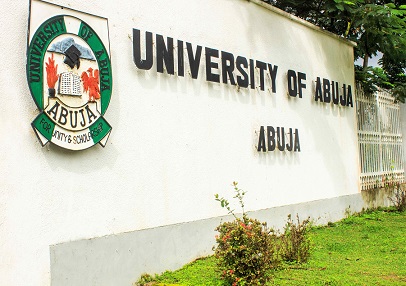
The Vice-Chancellor of the University of Abuja, now Yakubu Gowon University, Prof Hakeem Fawehinmi, has announced that the institution will offer automatic employment to its best graduating students, as 12,624 students are set to graduate at its 29th and 30th combined convocation ceremonies.
Fawehinmi made the disclosure on Monday while addressing journalists at the university’s main campus ahead of the convocation scheduled to run from April 10 to April 18, 2026.
He said the ceremony, his first convocation since assuming office, marked a major milestone in the university’s academic calendar, adding that activities for the week-long event include a Juma’at prayer, an inter-denominational church service, faculty innovation showcase, drug awareness lecture, climate change dialogue and a convocation lecture on artificial intelligence in fintech.
He disclosed that 7,158 students will graduate from the 2022/2023 academic session, while 5,466 will graduate from the 2023/2024 session.
According to him, overall First Class graduates across both sets stood at 77, with 2,048 Second Class Upper, 4,418 Second Class Lower and 644 Third Class in the 2022/2023 set; while the 2023/2024 set produced 29 First Class, 1,395 Second Class Upper, 3,091 Second Class Lower and 951 Third Class.
He said, “Overall, a total of 12,624 students will graduate. As part of our commitment to the development and advancement of our graduates, the overall best graduating students of both sets will be given automatic employment in the university.”
The VC added that honorary doctorate degrees would be conferred on three distinguished Nigerians in recognition of their contributions to society.
“The main convocation ceremonies will be held on Friday, 17 April 2026, for first degrees and on Saturday, 18 April 2026, for Higher degrees and the conferment of honorary doctorate degrees at the Convocation Square,” he said.
He listed the honourees as Prof. Yusuff Ali (SAN), Mr Paul Odili and Mr Emmanuel Iza.
The Vice-Chancellor noted that the institution’s student population currently stands at nearly 40,000, with projections to reach 50,000 by 2030, stressing the urgent need for infrastructural expansion.
“There is a sense in which we can tell Nigerians that this federal university needs massive expansion of infrastructure to become the University of our dreams,” he said.
Fawehinmi also acknowledged past leadership and administrative challenges, noting that the institution had experienced turbulence marked by instability and disunity, but insisted that stability had been restored.
“The fact that we had three Acting Vice-Chancellors within a short period explains this crisis. We are glad that now, the storm is over,” he said, while commending the government and the governing council.
He highlighted achievements in academic development, including strong accreditation outcomes, a N4bn intervention for the College of Health Sciences, research advances in cardiovascular and sickle cell diseases, and increased international collaborations.
On infrastructure, he listed completed and ongoing projects including administrative buildings, a CBT centre, expanded laboratories, improved digital connectivity, solar-powered staff quarters and plans for 1,500 student bed spaces through a public-private partnership.
He also disclosed that over 100 academic staff had been promoted to professorial ranks, while 28 students were expelled for various offences earlier in the year.
Fawehinmi raised concerns over funding constraints and land encroachment, warning that they could affect expansion plans, but expressed confidence that strategic partnerships and improved internally generated revenue would sustain growth.