The Petroleum Technology Development Fund (PTDF) yesterday started interviews for 2,102 applicants for the Overseas Scholarship Scheme (OSS).
The applicants are for PhD programmes in various fields of study in France, Germany, and Malaysia.
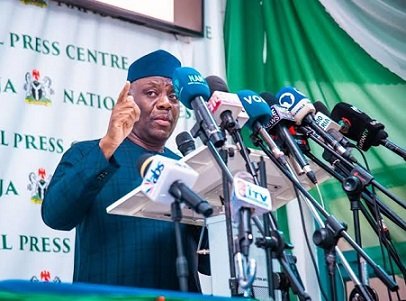
Addressing reporters during the screening in Abuja, PTDF’s Deputy General Manager of Education and Training, Dr. Mohammed Mustapha, said the postgraduate interviews that started last week would be concluded this week.
Asked how many PhD applicants were screened nationwide, he said: “It’s 2,102 nationwide.”
The deputy general manager explained that 912 of them were interviewed at the agency’s Abuja centre.
“But in Abuja, it’s 912, spread for five days,” he said.
Mustapha said he had announced last week that the number of successful candidates would be a factor in the budgetary provision and a management decision.
According to him, PTDF will award the scholarship to one scholar per state, in line with the Federal Character Commission (FCC) requirements.
Mustapha stated that each of the oil-producing states would get an additional slot.
The deputy general manager said the competition is usually very keen since the applicants compete with those from their states and it is always awarded to the highest scorer from the states.
The FCC representatives at the screening were State Coordinator John Imeji Uchara and a commissioner, Prof. Eugene Aleba.
Uchara announced that the commission was monitoring the interview to ensure a smooth selection of scholarship candidates for the varsity programmes.
He added that the commission’s presence was meant to ensure transparency, fairness, equity, and balance to avoid any complaints of imbalance.
Also, one of the applicants, a chemical engineer, Tanko Fwadwabea, was very hopeful he would win the scholarship.
On his research, he said: “My research topic is on process simulation, blue hydrogen production specifically, where the idea is to see how we can transition from a high energy emission country to a low emission country.
“It’s about the natural gas we have in Nigeria. Most of our natural gas is being exported at raw form,” he said.
Another scholar, Cornelia Collins-Onoha, who has a background in Geosciences, said his topic was on the spread and persistence of antimicrobial-resistant genes in aquatic environments, which has affected people in the oil-impacted regions.
He added: “So, we need to find out: why are these people getting sick due to oil spinach, and why are certain treatments not working for them?”
A panellist, Prof. Bashir Aliyu, said the interview was progressing well.
He said the panel was looking at the quality of candidates from their first degree, master’s, capacity, ability, and the quality of the work they present.