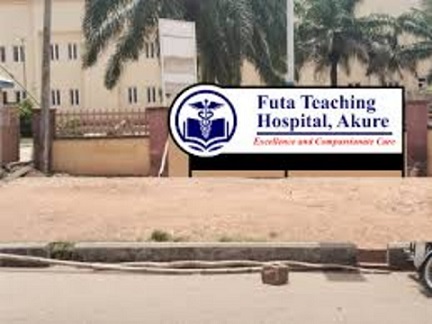
Stakeholders in Akure, on Thursday, reaffirmed their commitment to strengthening medical education and healthcare delivery with the commissioning of major projects at Federal University of Technology Akure (FUTA) in support of its newly established teaching hospital.
The newly commissioned projects, a modern laboratory equipment for the College of Health Sciences and a 50-bed medical hostel, are expected to significantly enhance clinical training, research capacity, and students’ welfare, positioning the institution as a growing hub for medical education in the region.
The FUTA Teaching Hospital, which received federal approval on December 16, 2024, and commenced operations on October 24, 2025, represents a major leap in efforts to expand tertiary healthcare services in Ondo State and neighbouring communities.
Chairman of the Central Community Planning Committee (CCPC) on the teaching hospital, Olufemi Oyinsan, described the commissioning as “another milestone” in the long-standing community-driven push to establish a fully functional teaching hospital in Akure.
Oyinsan explained that the facility is strategically positioned to significantly ease the burden on existing teaching hospitals, many of which are currently overstretched by increasing patient loads and limited infrastructure.
He said by serving as an additional centre for clinical training and healthcare delivery, the new facility is expected to decongest these institutions, allowing for more efficient service and improved patient outcomes.
He emphasised that beyond relieving pressure, the project will also broaden access to quality healthcare, particularly for underserved communities who often face challenges such as long travel distances, high costs, and delayed treatment.
He said, “With modern equipment and enhanced capacity, the facility is poised to strengthen both medical education and service delivery, ensuring that more people receive timely and standard care.
He explained that the creation of the College of Health Sciences was a critical prerequisite that strengthened the case for federal approval.
“A strong medical college became the foundation upon which our demand stood,” he said, adding that the latest intervention reflects sustained collaboration between the university, government, and the Akure community.
Oyinsan also highlighted the role of key individuals whose contributions proved decisive at crucial stages of the project.
He hailed the leader of Akure community and elder statesman, Pa Reuben Fasoranti, for his influence in facilitating the hospital’s approval, as well as Ifedayo Abegunde for underwriting a substantial portion of the laboratory equipment.
“At a crucial time when the project needed lifeline support, these individuals stepped in. Hon. Abegunde, in particular, funded well over 50 per cent of the laboratory equipment we are commissioning today,” he noted.
In his remarks, Abegunde, who serves as Executive Director (Corporate Services) at the Niger Delta Development Commission, expressed gratitude for the recognition, stating that the honour of naming the laboratory after him symbolises a shared commitment to development rather than personal accomplishment.
“This recognition is not about me alone; it represents a shared vision for progress, education, and investment in our future,” he said.
He stressed that quality healthcare delivery is inseparable from quality training, warning that no nation can build a resilient health system without investing in the education of its medical professionals.
According to him, the newly equipped laboratories will not only improve practical learning but also encourage research and innovation among students.
The Vice Chancellor of FUTA, Prof. Adenike Oladiji, commended donors, alumni, and community leaders for their continued support, describing the projects as timely interventions that will directly impact teaching, learning, and service delivery.
She noted that the availability of modern laboratory facilities and student accommodation would create an enabling environment for the training of medical and allied health students, while also strengthening the operational capacity of the teaching hospital.
Also speaking, the Deji of Akure, Aladetoyinbo Ogunlade Aladelusi, underscored the importance of sustained investment in the College of Health Sciences, noting that the long-term success of the teaching hospital depends largely on the quality of graduates it produces.
“Without properly training and graduating qualified students, the teaching hospital cannot function effectively,” the monarch said, urging stakeholders to maintain the momentum of support for the institution.
The laboratory equipment, sponsored by Abegunde, was formally commissioned by Pa Fasoranti who was represented by his son, Taiwo Fasoranti, while the medical hostel was inaugurated by the Deji of Akure.
The event drew academics, community leaders, government representatives, and health professionals, reflecting a broad-based consensus on the need to sustain investments in healthcare infrastructure and human capital development in Ondo State.