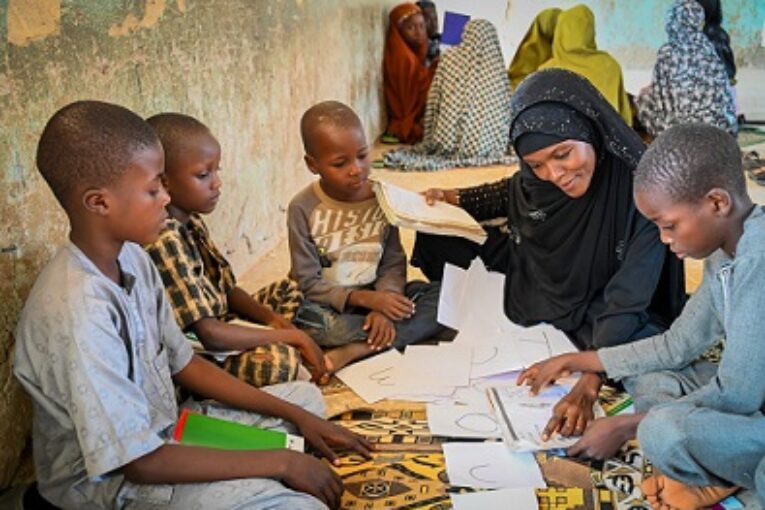
The federal government has disclosed plans to improve reading culture and reduce illiteracy levels among children living in Internally Displaced Persons (IDP) camps across the country.
This was disclosed by the Director for IDPs at the National Commission for Refugees, Migrants, and Internally Displaced Persons (NCFRMI), Fatima Maman Daura, during the launch of two books to commemorate the 16 days of activism and to restore the hope of the girl child in North-East Nigeria.
She also disclosed plans to distribute the books authored by Mrs Teresa Ameh to children in IDP camps as part of measures to improve reading culture.
She said, “We will purchase and distribute the books for the benefit of our displaced children. We set up transitional learning centres across states where we have high displaced populations and the transitional learning centres are designed to provide accelerated learning for displaced children.
“We have centres in Abuja, Katsina, Bauchi, Zamfara, Cross River and Imo and we’re hoping to expand as we get more resources.
“Part of our interventions is to improve literacy and numeracy and provide education; bridge the gap for the IDP children and then transition them into conventional schools. These books will improve their literacy because the books were written by a Nigerian author.”
The Author of the book, Mrs. Teresa Ameh, said she met all the requirements to attract children’s attention.
She said, “I have been writing for children for the past 20 years now
The books launched are colorful, they are not voluminous, the size is just the right size for children because their attention span is very short and we need to give them what they need.”
On the importance of reading, she said, “Media houses should also help encourage children to read by coming up with jingles or columns in the newspapers because reading helps form the mind.
“We are trying to bring up children that can interact with other children anywhere. We want to go beyond having children who know mathematics, we want them to be well grounded on different topics.”
“When we talk about adults who don’t read, it’s because we brought up children. Children who don’t read will grow up to become adults who don’t read too. So, we need to start changing and encourage our young.ones to imbibe reading culture.”