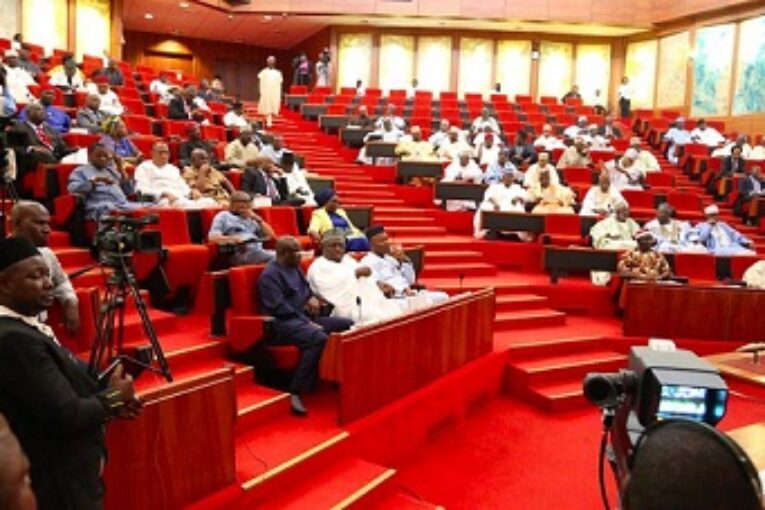
The Senate on Tuesday raised serious concerns over what it described as a sudden and poorly planned implementation of a new curriculum and registration guideline by the West African Examinations Council (WAEC), summoning the Minister of Education, Dr. Olatunji Alausa, alongside heads of key agencies to explain the move.
Lawmakers expressed apprehension that the abrupt policy, slated to take effect in two years, had been prematurely applied to students scheduled for the May/June 2026 Senior Secondary Certificate Examination (SSCE), potentially putting them at risk of widespread failure.
Leading the debate, Senator Karimi Sunday described the directive forcing current SS3 students to follow a curriculum designed for SS1 students as a “policy ambush.”
He noted that subjects such as Computer Studies and Civic Education, previously included in the WAEC syllabus, had been removed, leaving many students with only six examinable subjects instead of the required eight or nine.
“The shift is abrupt and ill-prepared,” Karimi said. “Students who have spent years preparing for these subjects are now being told, at the point of registration, that they no longer exist. This is unacceptable and a recipe for mass failure.”
Karimi argued that the move violates Section 14(2)(b) of the 1999 Constitution, which places the welfare of citizens at the heart of governance, and Section 18, which mandates the government to ensure equal and adequate educational opportunities.
In a fiery contribution, Senator Adams Oshiomhole condemned what he termed a “culture of anarchism” in the nation’s policy implementation framework.
“You cannot wake up overnight and say that in June students will be examined in a subject they have not been taught,” he said. “Intentions are not enough. Proper homework must be done.”
He demanded that the Minister of Education and all relevant agencies appear before the Senate Committee on Basic and Secondary Education to provide “concrete evidence of preparedness” before any new curriculum is enforced.
Senator Idiat Oluranti Adebule supported the motion, stressing that any curriculum overhaul must pass through the National Council on Education (NCE), which comprises all state commissioners for education.
“It is not something that can be introduced by fiat,” she cautioned, calling for a broader investigation into the entire curriculum review process.
Senator Solomon Adeola warned that many newly introduced subjects, such as cosmetology, garment making, livestock farming, GSM repairs, and solar installation, are skill-based and require specialised equipment that most schools lack.
“You cannot introduce highly practical subjects in schools where there are no workshops, laboratories, or even trained teachers,” he said. “That is setting students up for failure.”
After extensive debate, Senate President Godswill Akpabio ruled that the Education Minister and heads of relevant agencies be summoned immediately.
“These are very weighty issues,” Akpabio said. “We cannot risk mass failure in the 2026 WAEC examinations. The relevant committees should invite the Minister immediately and report back within two weeks.”
He noted that the Senate had already agreed that current SS3 students should be exempted from the new guideline, but insisted that comprehensive engagement with the ministry was necessary before any directive becomes final.
The Senate insisted that the matter must be addressed and resolved before the end of the year to protect the academic future of students across the country.
“This is an urgent national concern,” Akpabio stressed. “We must not allow confusion in the education sector to jeopardise the prospects of our children.”