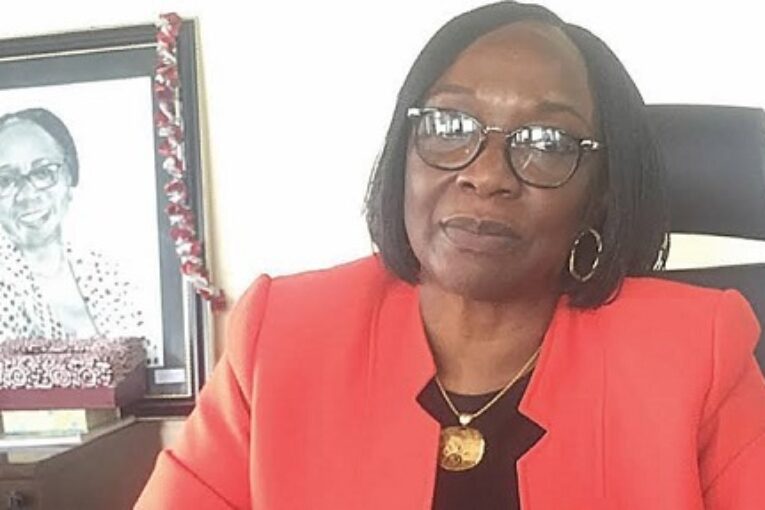
The Vice-Chancellor of the University of Lagos, Prof Folasade Ogunsola, has said the institution is focused on producing graduates who are problem-solvers capable of creating solutions to societal challenges rather than leaving school with academic certificates alone.
Ogunsola said this during an Entrepreneurship Development and Innovation Primer Programme held at the Ade Ajayi Main Auditorium on the university campus.
Speaking at the event, the Vice-Chancellor explained that the university is committed to producing graduates who can make meaningful contributions to national development by creating solutions to societal challenges.
According to her, the institution’s vision extends beyond awarding degrees, as it aims to produce individuals who can shape the country’s future and drive innovation across various sectors.
Ogunsola said, “We want to provide Nigeria with people who can shape our future, with people who can find solutions to our problems and people who can help us become the developed nation that we are looking for.
“We are on the way out, but we must support those who are coming behind us,” she said.
Ogunsola further noted that the university deliberately gave attention to entrepreneurship education, not merely to teach technical or vocational skills but to develop the right mindset among students.
She explained that the programme is designed to first expose students to their potential and capabilities before equipping them with the necessary entrepreneurial knowledge and soft skills over time.
“What we want to do is show them the capacity, and over the next few years, they will be trained in business skills, entrepreneurship skills and all the soft skills. We will also encourage them to form businesses and teams to solve problems,” she added.
The Vice-Chancellor also revealed that the university has established partnerships with various industries and innovation hubs to provide internship opportunities for students.
According to her, the initiative will enable students to gain practical experience while earning academic credit and building relevant connections within their chosen industries.
Ogunsola also called on Nigerians to stop placing all responsibility for national development on the government, stressing that every citizen has a role to play in building a better country.
“What I hear every time is that the government is not doing it. Why should the government do it? What are you doing in your space to make it better?
“We want people who are accountable and who recognise that the solution to Nigeria is not the government but every one of us,” she said.
Also speaking at the programme, the Director of the Entrepreneurship and Skills Development Centre at the University of Lagos, Abayomi Adebisi, said one of the major challenges among students is the lack of access to the right information that can inspire them to create opportunities for themselves.
According to Adebisi, the centre is working to ensure that students develop the confidence to build businesses and become independent rather than depending solely on employment after graduation.
“We need to let them know that we can create things out of nothing. We don’t need to prepare ourselves to go and work with Zenith Bank, Mobil or Shell. We can be the Shell inside the university, and that is what we are trying to do,” he said.
He added that the long-term goal of the programme is to ensure that students are able to establish functional enterprises even before leaving the university.
Adebisi noted that if thousands of students can create businesses before graduating, it could significantly reduce unemployment in the country.
“You can imagine if you can get 5,000 of them to create the businesses they will run before leaving the University of Lagos. You have already solved the crisis of unemployment,” he said.
“Every student of the University of Lagos should acquire the knowledge and ability to start an enterprise before graduating.”
Also speaking, UK-based property acquisition agent Yemi Edun described the Entrepreneurship and Innovation Primer Programme as a transformative initiative that could shape the future of students.
“This is a platform that in 10 years’ time people will ask, ‘Why didn’t anyone think of this before?’” he said.