By Abiodun Caston-Dada
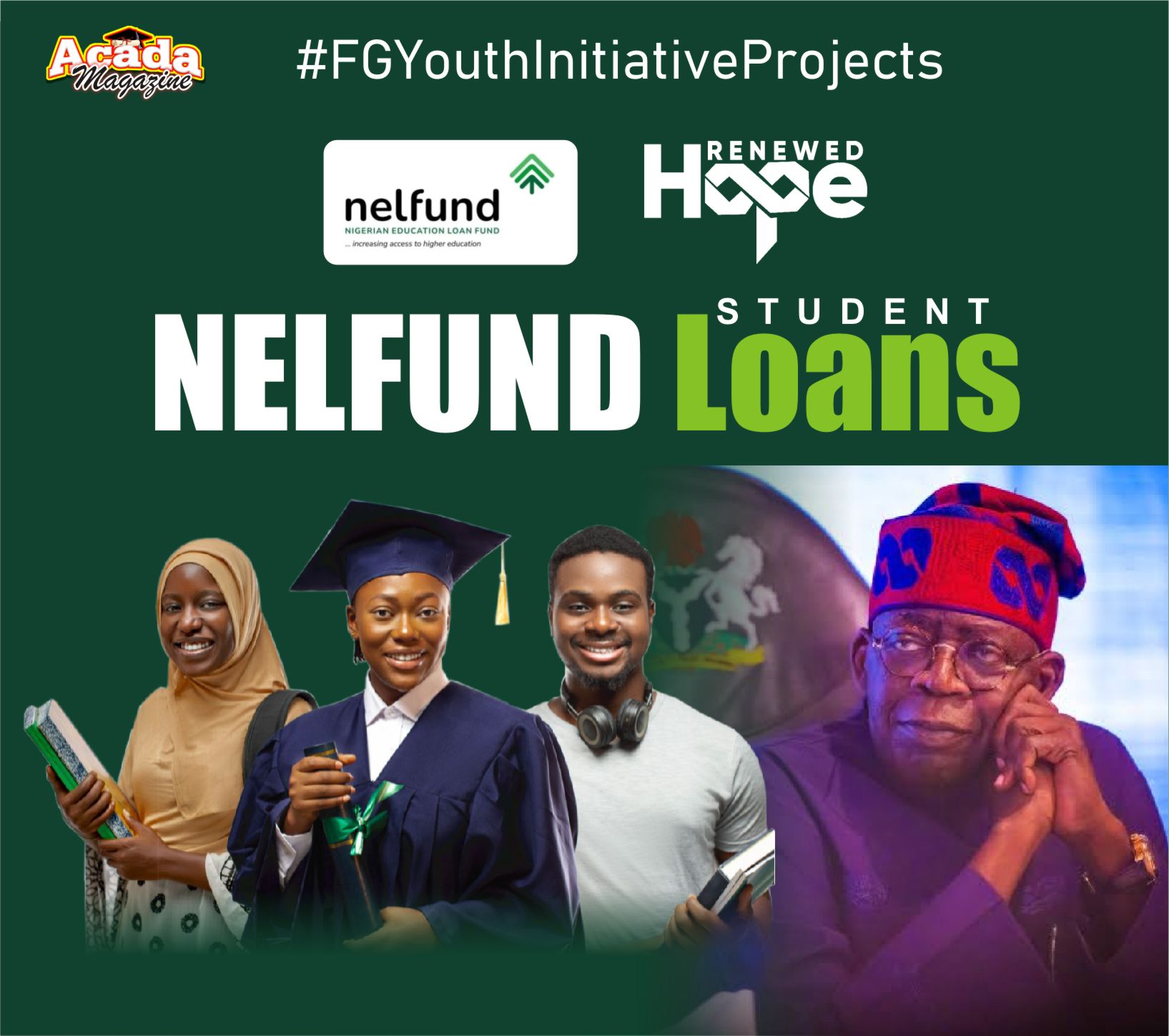
The last one year have witnessed praises from Nigerian students for the educational initiative introduced by President Bola Ahmed Tinubu, the Nigerian Education Loan Fund (NELFUND) which many have attested to have brought them financial relief. The NELFUND Student Loan initiative since it was launched have brought succor to many parents who cannot afford to fund their wards higher education and it has also prevented thousands of students from dropping out of school due to lack of funds. This can be seen in the various testimonies shared by students across various Nigerian campuses.
Aside tuition payment, NELFUND also provides monthly stipends of N20,000 for their upkeep. Whenever the students received the monthly alert, there is always jubilation at their hostels. Many of these students believe that the President Bola Ahmed Tinubu led government is making them a top priority and it is because of this they have resolved to pay him back by voting for him in the forthcoming election in 2027.
In a viral video on a Facebook posted by an online influencer, Prince Seidu Adamu aka Cartoon Boy, some campus students were interviewed by him and they attested to benefitting from the NELFUND student loan and also getting the N20,000 monthly stipends. They further revealed that, they have formed and registered a formidable solidarity group, ONE YOUTH FOR TINUBU with representatives at many campuses across Nigeria. The sole aim of this group is to back the second term bid of President Bola Ahmed Tinubu and ensured they deliver over 1 million votes to the president. Their plan is to sensitise and mobilise their fellow students to get their PVC and vote for President Tinubu.
Testimonies
There have been various testimonies from the recipients of the loans with many showering praises on the initiative and the president. Sharing personal stories about the impact of the loan on their education, the beneficiaries across campuses in Nigeria’s six geo-political zones, described it as a game-changer.
Oladepo Caleb Olugbenga, Ladoke Akintola University of Technology (LAUTECH) Overall Best Graduate – Graduated with a CGPA of 4.89 in Electronic and Electrical Engineering. He publicly stated on X (formerly Twitter), tagging NELFUND, Oladepo wrote: “I’m honoured to let you know that I am the Best Graduating Student of LAUTECH. Your loans made it possible,” sharing how he navigated severe rural hardship in Osun State—including years without electricity, before the NELFUND loan helped stabilize his final stages in school. On January 14 2026, the university formally named him the overall best graduating engineering student of the 2024/2025 session in Electronic and Electrical Engineering.
Another first-class graduate of Ladoke Akintola University of Technology (LAUTECH), Augustine Ayorinde, described NELFUND as a “lifesaver,” saying the intervention helped him and others transition from financial struggle to academic excellence.
Ayorinde, who graduated with a First Class and emerged as the second-best graduating student in the Department of Electronic and Electrical Engineering, shared his experience in a post on X (formerly Twitter). He wrote, “I’ve followed the recent online discussions regarding the NELFUND student loan, and as someone who has lived this reality, I feel it’s important to add my voice and my results to the conversation.
“The NELFUND initiative was introduced during the most difficult financial phase of our university journey. We didn’t hesitate to apply, and fortunately, we were among the very first set of beneficiaries to receive the loan,” he said.
He highlighted the mental toll of financial hardship before the intervention.
“People often underestimate the mental cost of financial lack. Before the loan, a significant portion of our energy was spent worrying about tuition deadlines and exam clearance.
“The stability provided by NELFUND, he explained, allowed students to redirect their efforts. “The NELFUND intervention bought us back our most valuable resource: time. Instead of spending our energy on desperate side hustles just to keep up with tuition deadlines, we were able to dedicate those critical hours to the lab and to our studies.”
A 300-level University of Lagos student, Migwe Obinna Nicholas, narrated how the Nigerian Education Loan Fund saved him from dropping out of school, describing himself as the only member of his family to have made it to university.
Nicholas, who is studying Theatre Arts and Film Studies at UNILAG, shared his experience in an interview with former Big Brother Naija housemate DeeOne, posted on Instagram.
“I’m the only person in my family that has made it to university. I’m using student loan to fund myself through school right now. I live in my local church while schooling. I don’t have my own apartment right now,” he said.
He disclosed that he had considered abandoning his education until he applied for the Federal Government’s student loan scheme.
“I was thinking about dropping out, but I had to take that loan because I didn’t want to stop. If the loan didn’t come, only God would have helped me.
“Seriously, I was going to drop out about two sessions ago, but then I took the loan because I didn’t want to stop,” he said.
Samuel Udeh, a 200-Level History and International Studies student at UNIUYO, said he applied for the student loan when faced with a financial challenge in his second year. “That was when I entered my year 200 because I didn’t have people to pay my fees. NELFUND has helped me a lot. I can do some major things concerning my education, like paperwork and other little payments to be done. So, it has actually helped me a lot.’’
He added that from the monthly upkeep allowance paid by NELFUND, he also makes little savings. “I’m saving part of the money I’ve been receiving; I’ve been saving some,’’ he said enthusiastically, stating further that the loan has eased the financial burden on his parents. “It has eased their stress in providing for my school fees and all that,’’ he stated.
Chiamaka Oshite, a 400-Level Mass Communication student at UNICROSS, shared the same sentiment, “I faced financial challenges before I applied for the NELFUND loan. At that point I had not paid my school fees. So, when NELFUND was introduced, I felt the need to apply for it and it actually did help. It has really influenced my education positively because it has helped me in paying my fees, buying textbooks; it has saved cost for me so I don’t even have to worry about my future fees.”
She asserted that on many occasions, the loan has come handy at the nick of critical needs. “There was this particular time we were asked to get a textbook and the deadline was very near, because they didn’t give us much time. So during that period, I was receiving monthly upkeep and the deadline of paying the money was two days ahead, and they paid me that evening; so it helped me,’’ she stated.
Aisha Falalu, a 200-level Biology student at Umaru Musa Yar’adua University, Katsina, stated that, with the monthly upkeep, she doesn’t have to worry about out-of-pocket expenses anymore. “It has influenced me in so many ways because by receiving 20k monthly, it helps me with handling little things I need to sort out,’’ she testifies, adding, that she does not bother her parents for many things she could easily cater for by herself.
Echoing the same sentiment, Khadija Sonibare, a 500-Level, Pharmacy student at the University of Ibadan, said she applied for the student loan when her dad had some financial challenges which affected prompt payment her school fees.
“The main person that sponsors my academic journey is my father and lately, paying my schools has not been so easy. Aside that, meeting the financial needs of other aspects of my life, and getting allowance is not too easy. So, the loan has reduced the financial burden from the person sponsoring my education. And for me too in a way, I’ve been able to concentrate more because I don’t really have to think of budgeting for school fees, because I know for sure there is a place where money will be coming from. The allowance too has been helping. It’s just making me more concentrated and more focused without bothering my dad about getting money for school,’’ she stated.
NELFUND Student Loan Factsheet
As of July 2026, the Nigerian Education Loan Fund (NELFUND) reports 1,635,676 student beneficiaries, over 1.7 million applications received from inception, and a total disbursement of ₦303.91 billion.
Disbursement and Recipient Breakdown
- Total Disbursed: ₦91 billion (as of early July 2026 reports).
- Institutional Fees (Tuition): ₦06 billion paid directly to participating public tertiary institutions.
- Upkeep Allowances: ₦85 billion paid out as monthly stipends to students.
- Total Beneficiaries (Recipients): 1,635,676 students.
- Participating Institutions: Over 350 public universities, polytechnics, and colleges of education onboarded.
NELFUND Student Loan Repayment
NELFUND student loan repayment does not begin until a beneficiary secures gainful employment after graduation, meaning no current student is mandated to start paying back.
Key Repayment Rules
- Employment Trigger: Repayment officially commences only after the beneficiary has completed their studies and secured employment.
- Deduction Rate: A deduction of 10% from the beneficiary’s salary is made at source by the employer once employed.
- Self-Employed Beneficiaries: Self-employed individuals are required to declare their income and remit 10% of their monthly profits or earnings to the fund.
- Early Repayment Option: Voluntary or early repayment is fully permitted and welcomed at any time if a former student has the financial means to do so.
NELFUND student loans do not attract interest; the Nigerian Education Loan Fund offers completely interest-free loans alongside the active disbursement of FREE N20,000 monthly upkeep allowances.
About NELFUND Student Loan
Student Loan Initiative (NELFUND) is a flagship initiative overseen by Nigerian Education Loan Fund (NELFUND) / Federal Ministry of Education. Its primary purpose is provide support and resources to Tertiary students through financial, technical and capacity-building interventions. The programme operates through a clearly defined application process which is hosted on the official portal ( https://nelf.gov.ng ), and includes online registration, verification and monitoring elements. Applicants are usually required to provide digital documentation, meet eligibility criteria set by the administering agency, and comply with reporting and repayment guidelines where applicable. The programme’s design emphasises transparency, measurable outcomes and linkage to other support services such as training, market access and technical assistance. Beneficiaries typically gain access to financial or technical inputs, and the scheme includes monitoring and evaluation mechanisms to measure impact and ensure funds reach intended recipients. The initiative is often complemented by partner institutions and private sector actors to scale impact.
At a time when many students struggled with the rising cost of education, NELFUND has offered hope, relief, and a chance to pursue their dreams without financial barriers.