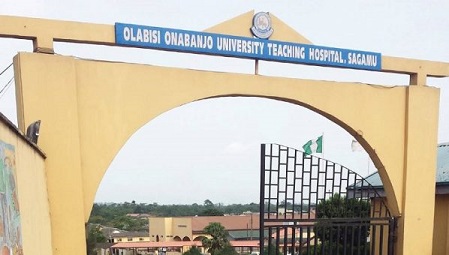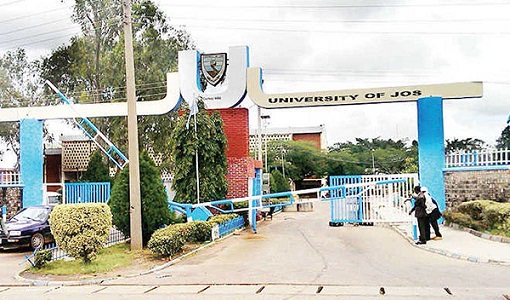
Recent tendencies across Nigerian universities point to an unacceptable escalation in entrenched politicisation of the most sensitive of their functions, namely admission of students as well as appointments of critical staff. A closer look at the admission of students and employment practices in many of our institutions betrays significant lopsidedness, which is often in favour of the political power brokers who dominate the location of a designated institution. In order to ensure that their children and wards secure admission in institutions of their choice, they cut corners and even apply pressure on the targeted institution, whose leadership often succumbs. Perhaps even more telling is that the sponsors even go to the extent of dictating choice courses for their children and wards, which distorts the academic programmes of the institutes.
Against the backdrop of Nigeria’s socioeconomic circumstances, the factors that determine the establishment of universities include the need to provide equal access and equity across the states of the federation. Hence, universities are cited to address the needs of designated catchment areas. However, with the prevalence of politicisation, such an expectation of the country is vitiated.
For instance, the University of Abuja recently uncovered as many as 200 fake admissions in its students’ intake. These are entrants who did not meet the prescribed admission requirements but were illegally enjoying their unlawful stay in the institution, ostensibly through the backdoor. The situation led then Acting Vice Chancellor, Professor Patricia Manko Lar, to advise parents and guardians to stop sponsoring such unlawful admission schemes by paying admission syndicates and sundry agents to procure illegal admission spaces for their children and wards in the country’s universities.
Also, in 2023, Rivers State Governor Siminalayi Fubara sacked over 1,700 newly employed staff of the state government-owned Ignatius Ajuru University of Education (IAUE), citing irregularities in the employment process. The cancelled employment exercise was said to be bedevilled by nepotism.
Incidentally, these mentioned incidents are just the tip of the iceberg of tendencies of manipulating placements in Nigerian universities, through politicisation or otherwise. On a more telling note, the syndrome of politicisation has come to synergise with the plague of corruption in Nigerian universities’ system to further compromise the integrity of the institutions.
Seen in proper context, universities are vital to any society for their role in generating and sharing knowledge through research and education, preparing students for professional careers and civic life, as well as driving innovations and progress of the society. They also foster social mobility, preserve culture and provide expertise to address societal challenges. They are therefore the main driver in the maxim that ‘knowledge drives progress’.
Against the backdrop of the role of these institutions being crucibles in which the critical human resource endowments of the country are moulded, the incidence of politicisation remains anathema to the interests of the nation. For by its playout, the overall interests of the nation are displaced by the parochial concerns of a few individuals, simply by their advantage of closeness to the corridors of power.
Also, by allowing the syndrome to continue, the country is simply frittering away. This derives from the major drawbacks for the country, which include the compromise of the integrity of the products of our universities and the destruction of merit as the principle on which academic enterprise rests. If unchecked, the syndrome leads to decline in academic standards, production of inadequately trained graduates, and a drawback on the country’s aspirations for national development.
That is why the country needs to address itself to this menace that is threatening the university system. It is always a matter of intense infighting whenever the leadership of these institutions are to be replaced on routine basis or otherwise. Even when seniority defines the succession process, other factors based on politics often rear their heads and scuttle leadership changes.
The way out for the country rests on many factors. Firstly, is the issue of adequate funding of the universities to minimise infighting for opportunities among the academic staff. The current state of inequity in the allocation of resources among the programmes of the institution generates a scramble for available largesse, which spawns bad blood among the concerned academics.
Secondly, the university dons should minimise dependence on the largesse from government and evolve into generators of marketable ideas and projects, as well as inventions which wider society will need. After all, the inventions that drive the world today were invented by minds that were often not as intellectually endowed as the cross section of the professors and other assets in Nigerian ivory towers.
As a developing country, the Nigerian socio-economic environment has legions of marketable fallow areas and opportunities for research ventures to thrive in. In this respect, they need to take a cue from university dons in foreign countries that hardly live off the salaries from their university teaching jobs, but are self-reliant in remuneration as they make more money for their inventions and projects which industry use for global business.
Credit: Dailytrust