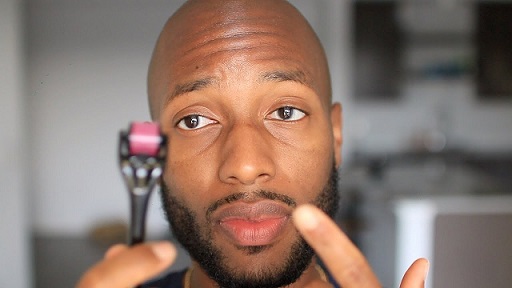
Want to find out if derma rollers can boost beard growth? Read this carefully-written article for a response to your questions.
Beard growth problems are common, and these include issues like patchiness, weak density, or slow follicle activation. This makes men seek solutions beyond simple genetics and grooming routines.
One such method involves the use of derma rollers, small handheld devices with hundreds of tiny needles aimed at stimulating facial hair growth. However, the real question is whether derma rollers actually work in beard growth, and if there is some scientific evidence to support these claims.
How Derma Rollers Work for Beard Growth
A derma roller is basically a microneedling device. It inflicts controlled micro-injuries on the skin with tiny needles, usually of size 0.25–1.0 mm in length. The created micro-injury activates the body’s wound-healing cascade, which is the key mechanism behind beard growth stimulation.
The wound-healing process follows:
Inflammation phase
The skin, detecting injury has occurred, increases blood flow and immune responses.
Proliferation phase
This is the laying down of new collagen, elastin, fibroblast, and growth factors such as PDGF and EGF by the skin.
Remodelling phase
The newly formed tissue is strengthened and reorganised, enhancing skin structure and follicle support.
These processes are important in that hair follicles depend on solid collagen networks and healthy microcirculation. Microneedling helps improve that environment to allow follicles to grow thicker, healthier beards.
Evidence from Clinical Research on Microneedling & Hair Growth
Although beard-specific studies remain scant, microneedling has been clinically proven to support hair regeneration on the scalp.
One randomised controlled trial in 2013 reported that men using microneedling and minoxidil had significantly more hair growth compared to men using minoxidil alone.
Microneedling has been shown to increase collagen production by up to 400% over several months and enhance hair density, thickness, and follicle count in various dermatology studies.
These findings strongly support its role in stimulating hair follicles by enhancing cellular turnover and increasing blood supply.
Although the exact results can differ regarding the beard, precisely, the same biological principles apply to the follicles of facial hair.
Improved Absorption of Beard Growth Products (Minoxidil, Oils, Serums)
One of the lesser-known benefits of derma rolling is improved transdermal absorption. Microneedling temporarily enhances the permeability of the stratum corneum, which is the top barrier layer of the skin.
This could significantly improve the absorption of:
- Minoxidil (Rogaine)
- Natural oils: castor oil, jojoba oil
- Peptide serums
- Growth factor serums
Scientific research has shown that microneedling can enhance absorption by 80–300%, depending on needle depth and skin type.
This is important because many active ingredients struggle to penetrate deeply enough to reach hair follicles. With derma rolling, they can penetrate more effectively into the dermis, where follicles are located.
Beard Growth Stimulation Depends on Needle Size and Technique
Derma rolling is effective only when done correctly. Using the wrong-size needles or rolling too frequently can damage the skin rather than help it.
Best Needle Size for Beard Growth:
- 0.5 mm – Ideal for beard follicle stimulation
- 0.25 mm — Better for enhancing serum absorption
How Often to Derma Roll
If you’re using the 0.5mm, then once or twice a week is okay. However, if it is the 0.25mm, then it should be done 2-3 times a week.
Avoid daily use, because the skin needs to heal for collagen production to take place. Also, over-rolling can bring about inflammation, irritation, hyperpigmentation, or even scarring. Beard skin is much more sensitive than scalp skin; thus, restraint is vital.
What Results to Expect (Realistic Outcomes)
The Derma roller is not a magic gadget; it optimises conditions to favour growth, but it cannot completely overcome genetics.
Derma rolling can:
- Increase beard density
- Thicken existing beard hairs
- Helps fill in patchy areas
- Stimulate growth in regions with dormant or weak follicles.
- Improve beard texture
- Enhance the effectiveness of minoxidil or serums
- Derma rolling cannot:
- Create hair where no follicles exist
- Replace professional treatments like PRP or hormone therapy
- Genetic limitations entirely rewritten
- Most users start to see early signs of improvement within 4–8 weeks and more noticeable results around 10–16 weeks. Full changes may take up to 6–12 months, just like with other hair-growth treatments.
- Safety Precautions and Dangers – What to Avoid
Derma rolling is safe when done hygienically and with caution, but if misused, it comes with risks.
Essential Safety Steps:
Sterilise the roller with 70% isopropyl alcohol before and after each session.
Never share a derma roller.
Avoid rolling over active acne, irritation, cuts, eczema, or infections.
Use light, even pressure, but don’t press your needles into your skin.
Replace the roller every 1–3 months or if needles become bent or dull.
Possible side effects are redness (normal for 12–48 hours), temporary sensitivity, mild swelling, skin irritation, hyperpigmentation from rolling too often on darker skin tones, and infection due to poor hygiene.
In case you experience severe pain, prolonged redness, pus, or fever, discontinue use and consult a healthcare professional.
Derma rollers can support beard growth if applied with the right technique and realistic expectations. However, it is not a one-stop solution, and it won’t work if genetics says otherwise.
Still, if you’re consistent, cautious, and follow the correct routine, derma rolling can strengthen your beard, improve density, and help you achieve fuller facial hair over time.
Credit: Pulseng