Abiodun Caston-Dada
A special tribute to the greatest story of redemption, genius, and glory in modern football
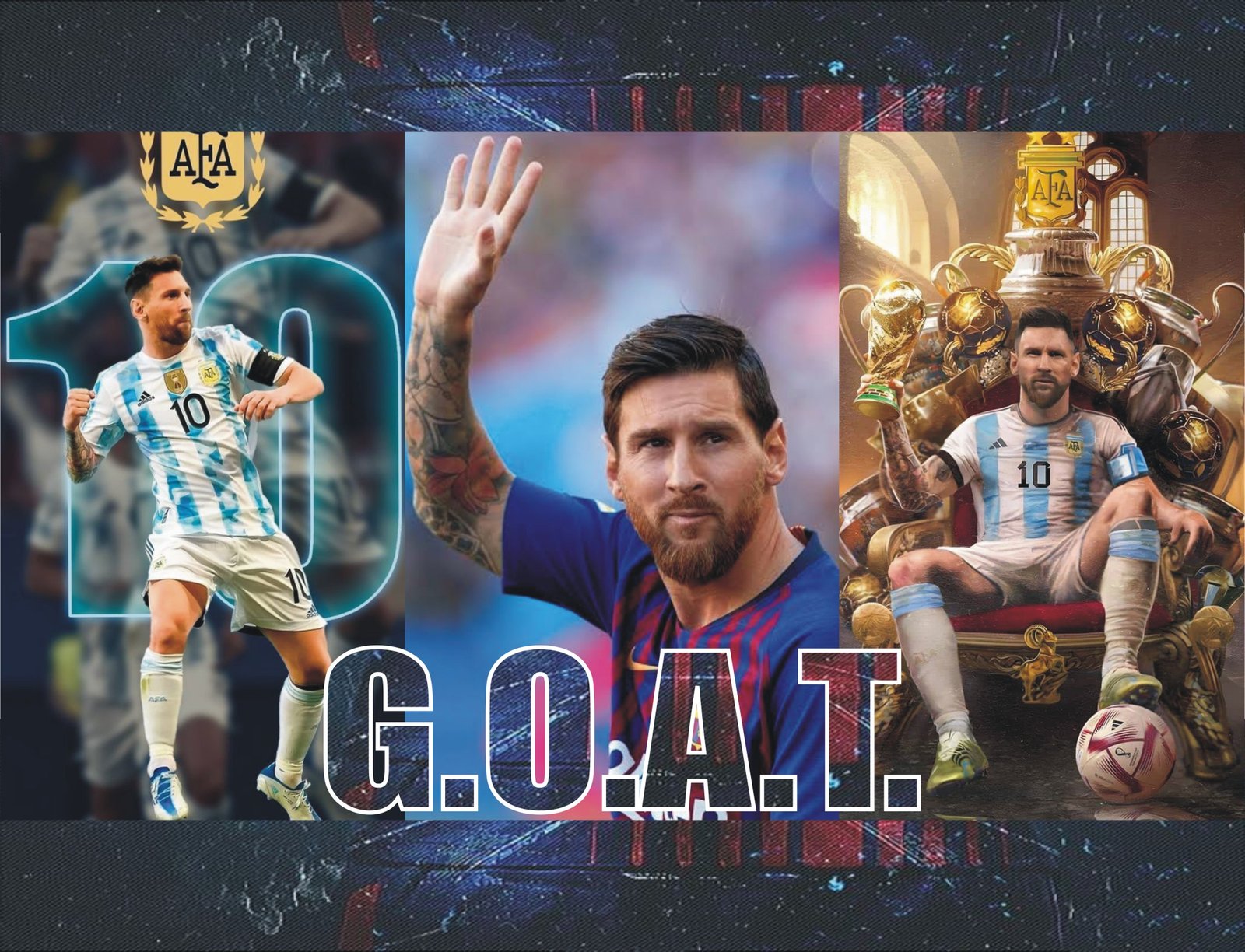
There are careers, and then there is Lionel Messi’s with Argentina.
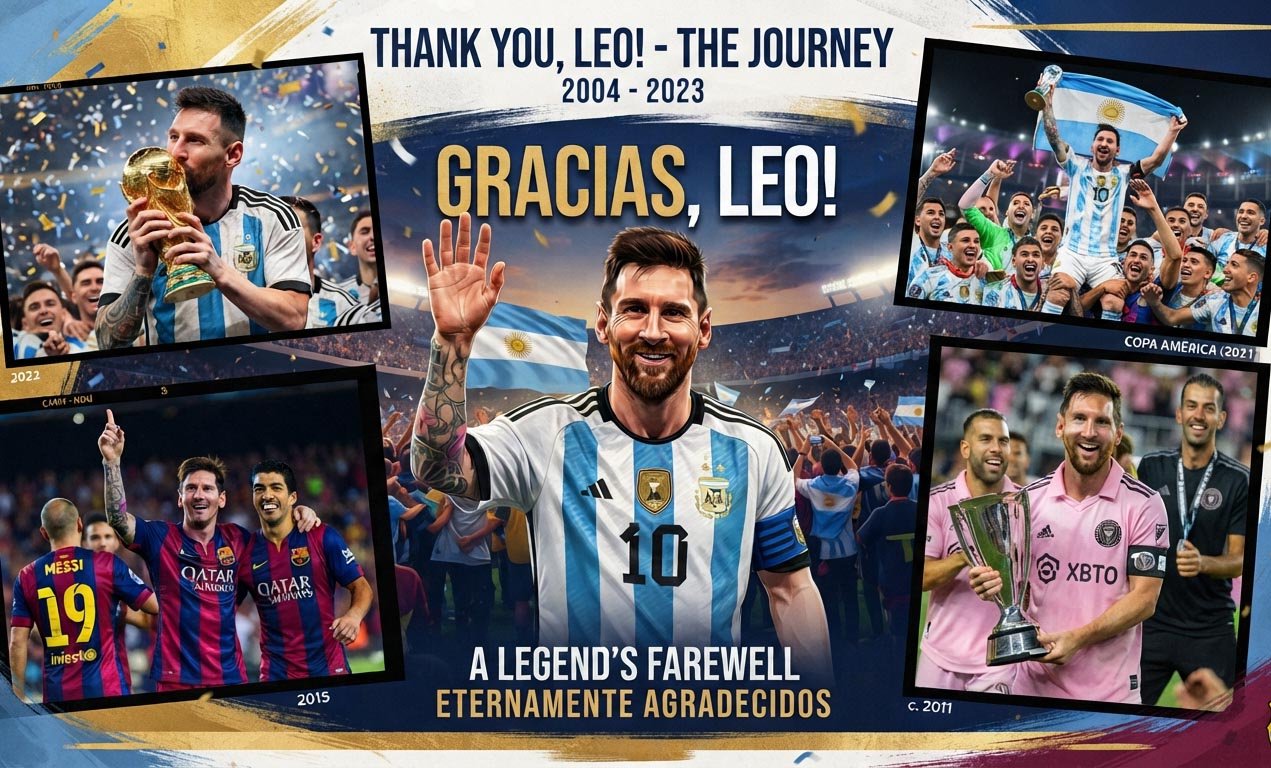
On a late August day in 2026, the eight-time Ballon d’Or winner posted the words the football world had sensed were coming. After 21 years, six World Cups, and a journey that transformed a nation’s heartbreak into its greatest triumph, Messi announced he was retiring from international football. The decision, he said, “hurt — and still hurts deep down.” He wrote it two days after Argentina’s extra-time defeat to Spain in the 2026 World Cup final, then held it close through the subsequent loss of his father, Jorge. When he finally shared it, the certainty was complete: the time had come.
His final competitive appearance came in that World Cup final. A farewell match against Benin at the Monumental later allowed one last dance in the albiceleste, one more goal, two more assists, and a stadium full of gratitude. The numbers that closed the book are staggering even by his standards: Argentina’s all-time leading appearance-maker and goalscorer (208 caps, 126 goals in the most complete tallies), a record assists tally, and a place among the most influential players the international game has ever seen.
From Burden to Banner
Messi’s Argentina story was never simple. He debuted as an 18-year-old in 2005 and carried the weight of a football-mad nation almost immediately. The early years brought near-misses that cut deep: Copa América final losses in 2007, 2015 and 2016, and the 2014 World Cup final defeat to Germany. After missing a penalty in the 2016 shootout against Chile, a devastated Messi announced his international retirement on the spot. “I’ve done all I can,” he said. The pain of four major final defeats in nine years had become unbearable.
Argentina refused to let him go. A national campaign, the pull of the shirt, and the quiet insistence of teammates brought him back. What followed remains one of the most extraordinary second acts in sport.
Under Lionel Scaloni, the team found clarity and steel. In 2021, Messi finally lifted major silverware with the senior side, captaining Argentina to the Copa América title with a 1-0 win over Brazil at the Maracanã. The drought that had lasted 28 years was over. Momentum became destiny. The Finalissima against Italy at Wembley followed in 2022. Then came Qatar.
The 2022 World Cup was the fairytale written in real time. Messi scored seven goals and produced three assists. He was the orchestrator, the finisher, the emotional centre. In the final against France he scored twice, set up the equaliser that forced extra time, and converted his penalty in the shootout. When he lifted the trophy, an entire country exhaled. The player once accused of never delivering for Argentina had delivered the ultimate prize. He left Lusail as the tournament’s best player and as a national icon who had stepped out from the long shadow of Diego Maradona into a light entirely his own.
He was not finished. Another Copa América arrived in 2024. Then, at 39, he led Argentina back to a third World Cup final in 2026, scoring eight goals and providing four assists along the way. Spain denied the perfect ending, but the chapter no longer needed perfection. Messi had already rewritten the narrative.
The Numbers That Tell Only Part of the Story
208 appearances — the most in Argentina history
126 goals — clear of Gabriel Batistuta’s previous record
Around 68–70 assists — the country’s all-time leader
Six World Cups (a joint record) and a record 34 appearances
Three World Cup finals (2014, 2022, 2026) — the second player after Cafu to achieve it
Four senior major titles: Copa América 2021 & 2024, Finalissima 2022, World Cup 2022
Youth foundations: FIFA U-20 World Cup 2005 and Olympic gold in 2008
Beyond the tallies sits the less measurable truth. Messi scored and created in every phase of a career that stretched across two decades of changing football. He was the teenager who dazzled, the young man who suffered under impossible expectation, the veteran who learned to carry a nation’s dreams with quiet authority, and finally the champion who made those dreams real.
What He Leaves Behind
Messi’s international retirement does not diminish what remains at club level with Inter Miami, where the contract runs to 2028 and the magic still flows. But the Argentina chapter was always different. It was the one that asked more of him than pure footballing excellence. It demanded resilience, patience, and the courage to return after public heartbreak.
He leaves having given everything, as he insisted in his farewell message. He leaves with the knowledge that he and his teammates delivered the moments a generation of Argentines had spent their lives hoping for. He leaves having turned a complicated relationship with the national team into a story of redemption that will be told for decades.
This week, on a night billed as “The Last Tango,” Argentina and its people gave Messi the send-off he deserved. On Tuesday at the Estadio Monumental, more than 85,000 fans filled the stands for a 3-0 friendly victory over Benin. Messi played the full 90 minutes, providing assists for goals by Nicolás Otamendi and Nico Paz before converting a penalty for his 126th international goal. Play was halted in the 10th minute for a prolonged standing ovation and fireworks in honour of his famous number. A giant blue-and-white jersey reading simply “Gracias” stretched across the pitch beforehand. Benin’s players embraced him and presented gifts. After the final whistle a drone show illuminated the sky with images of his career, including the moment he lifted the World Cup in Qatar, while teammates, opponents and the crowd lingered in celebration. Messi, visibly emotional throughout — wiping away tears on the team bus and again during the national anthem — addressed the supporters one last time, calling it the saddest day of his career yet affirming the immense pride of having worn the shirt for more than two decades.
In the end, the tribute writes itself. Lionel Messi did not merely play for Argentina. He made Argentina dream again — and then he made the dream come true. The blue and white shirt will be worn by others now. The standard he set, the joy he delivered, and the legacy he forged will belong to the country forever.
Gracias, Leo.
Vamos Argentina.