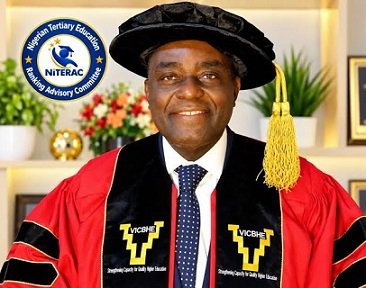
The Academy of Medical Sciences of Nigeria (AMSN) has installed the former Vice-Chancellor of Nnamdi Azikiwe University (UNIZIK), Awka, Prof. Joseph Ahaneku, as its new president.
Prof. Ahaneku, a renowned consultant chemical pathologist and current Vice-Chancellor of the National University of Science and Technology, Abuja, was installed on Saturday in Lagos alongside 11 other executive officers of the Academy. He will serve a two-year term, succeeding Emeritus Professor Osato Giwa-Osagie.
The Academy also presented its highest honour, the Nobel (Golden) Prize, to Professor Okechukwu Ogah, a distinguished consultant cardiologist and Professor of Medicine at the University College Hospital (UCH), Ibadan. Professor Ogah received a N10 million cash prize alongside a medal.
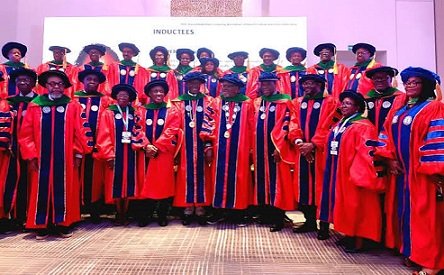
Additionally, the Academy conferred its fellowship on 12 professors and one PhD holder who have distinguished themselves in various fields of medical sciences across Nigeria. Their inductions follow the admission of 15 fellows in 2025 and 13 in 2024, further expanding the numerical and professional strength of the body.
Swearing them in at an event held in their honour in Ikeja, the Chairman of the Board of Trustees (BoT) of the Academy, Olorogun Dr Sonny Folorunso Kuku, stated that the new president, the gold medallist and all 13 inducted fellows were experts in their respective fields.
He noted that they had all undergone a rigorous selection process and fulfilled the stringent conditions set by the Academy. He congratulated the inductees and wished them success in their roles.
The newly inducted fellows include: Professor Sunday Akintoye (Oral Medicine); Professor Emmanuel Balogun (Enzymology and Molecular Biology); Professor Rasheed Balogun (Nephrology); Professor Ene Ette (Clinical Pharmacology/Pharmacometrics); Professor Okechukwu Ogah (Cardiology); Professor Omonike Ogbole (Pharmacognosy/Phytomedicine); Professor Anthony Okorodudu (Pathology/Clinical Chemistry); Professor Olusola Olawoye (Ophthalmology); Professor Adebola Orimadegun (Paediatrics and Child Health/Clinical Epidemiology); Professor Bamidele Owoyele (Physiology/Neuroscience); Professor Wellington Oyibo (Medical Parasitology); Professor Musa Yakubu (Biochemical Toxicology/Reproductive Biochemistry and Ethnopharmacology); and Dr Abiola Adeniyi (Dental Public Health).
In his valedictory address, the immediate past president, Emeritus Prof. Frank Osato Giwa-Osagie, expressed delight at the achievements recorded during his administration, attributing the success to the unwavering support of the Academy’s leadership, fellows and staff.
He emphasised that the selection processes remained transparent and merit-based.
While thanking the members, particularly the foundation president and President of the African Reproductive Care Society (ARCS), Prof. Oladapo Ashiru, and the BoT Chairman, Dr Sonny Kuku, Prof. Giwa-Osagie urged them to extend the same cooperation to his successor and the new executive team.
He pointed out that the success and development of the Academy were shared responsibilities.
Underscoring the role of the seven-year-old Academy, he noted:
“The body is dedicated to promoting excellence in medical research, education and mentorship.
“It also ensures that research is actively applied to medicine to enhance human health and welfare, while performing advisory roles to the government on national medical issues.”
Another major highlight of the event was the investiture of Deacon Olatunji Kolade Bello, a distinguished businessman and philanthropist, as a patron of the Academy.
In his inaugural speech, Prof. Joseph Ahaneku outlined a vision driven by strategic partnerships and internal mobilisation to steer the next phase of the Academy’s growth. He committed his two-year tenure to consolidating the achievements of his predecessors through a unique “horizontal and vertical relationship matrix”.
Under his horizontal strategy, Ahaneku called on existing and newly inducted fellows to volunteer their time and expertise across various committees and sections to maintain a vibrant institution. He also announced plans to boost the Academy’s visibility across Nigerian universities, tertiary health facilities and research institutes.
To combat institutional fatigue, the new president emphasised the need to actively mobilise younger medical researchers.
“The average age of the Academy is about 65 years,” Ahaneku noted, stressing that advocacy efforts would focus on encouraging younger colleagues to join and share in the Academy’s benefits.
Vertically, the president pledged to drive deeper engagement and partnerships with government ministries, departments and agencies, development partners, and private corporate leaders to improve infrastructure.
Ahaneku, who humorously referred to his new role as the Academy’s “chief beggar” — a title traditionally passed down by his predecessors — emphasised that resource mobilisation would remain central to expanding the institution’s reach and impact.
He thanked the leadership and fellows for the confidence reposed in him and his team, and extended special appreciation to his family members, particularly his wife, for their unwavering support throughout his life’s journey.
Many eminent Nigerians attended the event, including Elder Felix Ohiwerei and former Minister of Power, Prof. Bart Nnaji.