Adopts results-driven model for N12 billion digital research clusters
The Federal Government has unveiled a new national laureate yearly prize programme, with doctoral students set to receive up to N20 million for outstanding research work in tertiary institutions nationwide.
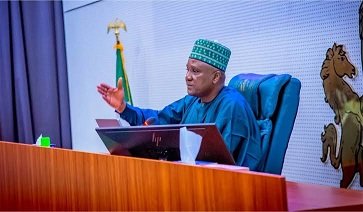
Minister of Education, Dr Tunji Alausa, who announced the initiative yesterday, described it as a major step toward rewarding academic excellence and positioning research as a key driver of national development.
According to him, exceptional theses and dissertations will be recognised yearly, with PhD winners emerging as the top beneficiaries with N20 million prizes, alongside national honours. Master’s degree winners will receive N10 million, while undergraduate dissertation winners will take home at least N5 million.
However, a statement by the Director of Press and Public Relations at the ministry, Folasade Boriowo, noted that the initiative was designed to elevate the status of academic research in Nigeria, stressing that scholarly work should attract the same level of prestige and reward as other high-profile sectors.
Alausa said that the programme signals a shift in national priorities by placing intellectual achievement and innovation at the centre of recognition, adding that students’ research could serve as practical solutions to Nigeria’s economic and industrial challenges.
He added that the initiative would be funded by the Nigeria Education Repository and Databank (NERD) and its partners, ensuring sustainability without placing additional burden on government finances.
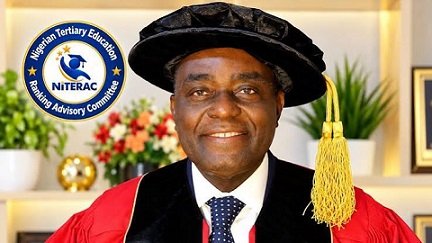
The minister said that a 10-member National Laureate Prize Committee had been inaugurated, chaired by Prof. Abubakar Sambo, to oversee submissions, screening, and selection of winners nationwide.
The programme is expected to kick off with a call for entries in May 2026, with evaluations scheduled between June and September, while winners will be honoured at a National Laureate Gala in November in Abuja.
The government said the initiative marks a new era where academic research is not only a requirement for graduation but a pathway to national recognition, innovation, and substantial financial reward.
Meanwhile, the Federal Government has adopted a results-driven model for its N12 billion National Digital Economy Research Clusters programme, ensuring that funding and support are tied to measurable outputs, and policy relevance.
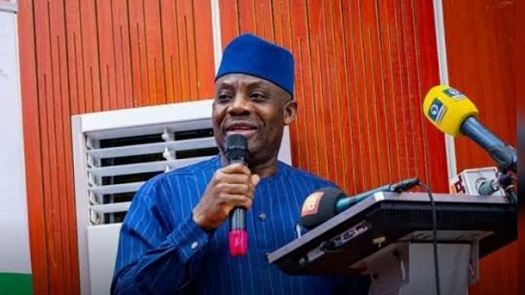
Minister of Communications, Innovation and Digital Economy, Dr Bosun Tijani, disclosed this yesterday at a media briefing in Abuja.
The minister’s remark follows his announcement at the weekend on his X handle, where he invited academic institutions to participate in the research clusters, marking a critical step in Nigeria’s efforts to integrate rigorous, evidence-based research into digital economy policy.
According to him, the three-year initiative will link funding to measurable outcomes and policy relevance, with roughly N1.5 billion allocated to each thematic cluster.
Tijani noted that the clusters are designed to generate practical insights that directly inform policy, while strengthening Nigeria’s research capacity.
He said that each cluster would be supported by three post-doctoral fellows and three PhD students per professor, and they will collaborate with foreign researchers to expand capacity and funding.
Earlier, the Minister of Education said the clusters would position universities as engines of innovation and talent development.
He said that students would gain skills in software development, cybersecurity, Artificial Intelligence (AI), machine learning, and Information Technology (IT) automation.
“Our universities must move from just places where theoretical education has been given.
They must be where the capacity of millions of youths is built,” he said.
Alausa added that participants would have access to professional certifications from Google, IBM, and Microsoft, adding that the programme will stimulate entrepreneurship and economic growth by linking research to practical solutions.
“It’s not just about the 200 researchers. It’s the cascading effect that will happen afterwards. It won’t stop here. It will just continue to grow with what we’re starting today,” he said.